Glitre Energi Produksjon-Stopped Leakage from a Francis Turbine with a Split Mechanical Seal
How a new sealing solution reduced leakage and maintenance requirements at Kaggefoss hydropower plant
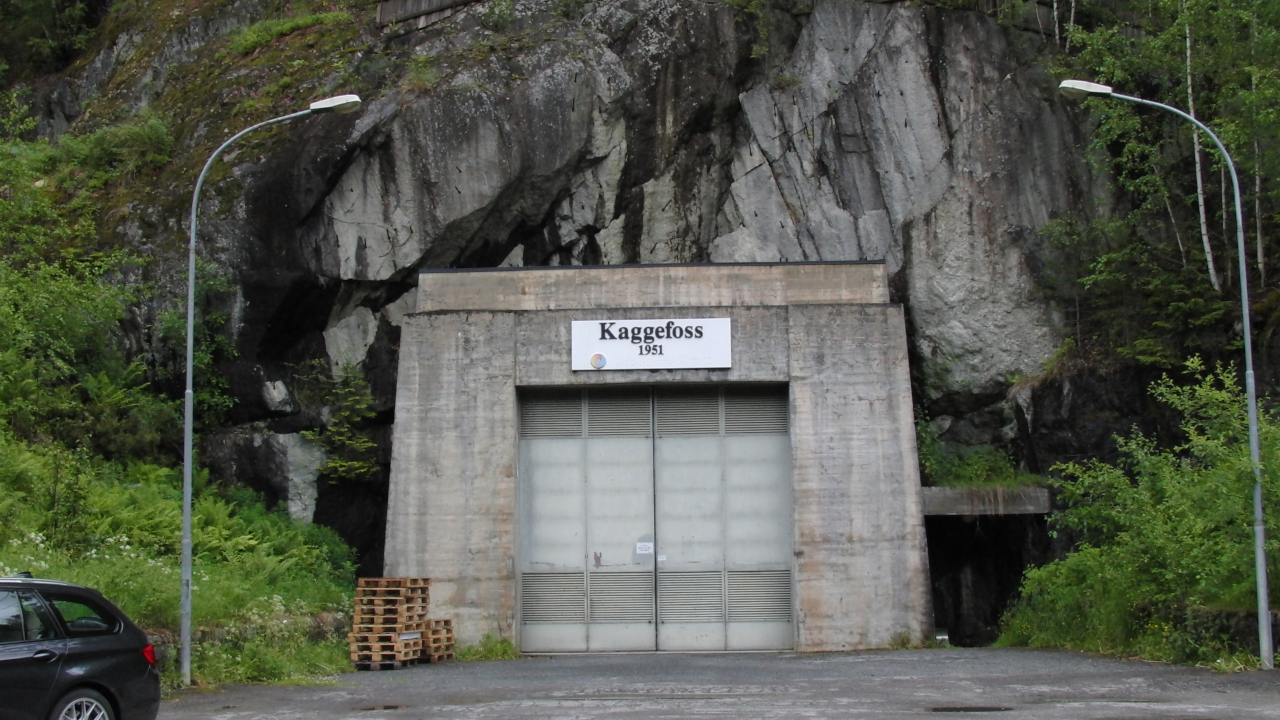
At Kaggefoss hydropower plant outside Drammen, Glitre Energi Produksjon was experiencing an increasing problem with water leakage from a Francis turbine. The traditional graphite packing required regular adjustment, while leakage gradually increased.
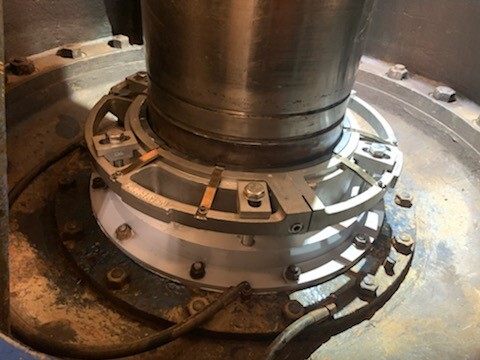
The solution was a Chesterton 442 Jumbo split mechanical seal, adapted to the existing turbine. The result was a leak-free shaft seal and reduced need for maintenance work on rotating equipment.
The challenge: Increasing leakage from a Francis turbine
Glitre Energi Produksjon upgraded the Francis turbines at Kaggefoss in 2012. However, the existing solution with traditional graphite packing was retained.
Over time, leakage increased, and the packing had to be tightened regularly to maintain its function.
This created several challenges:
- Regular adjustment of the stuffing box required time and planning.
- Work on rotating equipment requires appropriate safety measures.
- Increasing water leakage affected the capacity of the drainage pumps.
- Maintenance requirements increased as the leakage became more severe.
For a hydropower plant, this type of leakage is therefore not only an issue with the seal itself. It can also affect other parts of the plant’s operation.
How did Fuglesangs solve the leakage problem?
Instead of continuing with the existing stuffing box solution, a Chesterton 442 Jumbo split mechanical seal was selected and adapted to the turbine.
The seal is split and can be installed around the shaft. This makes it possible to carry out the installation without dismantling the entire shaft and turbine assembly.
Technical data
|
Parameter |
Data |
|
Customer |
Glitre Energi Produksjon |
|
Hydropower plant |
Kaggefoss hydropower plant |
|
Equipment |
Francis turbine |
|
Seal |
Chesterton 442 Jumbo |
|
Shaft diameter |
Ø440 mm |
|
Shaft speed |
300 RPM |
|
Seal configuration |
RSC / RSC |
|
Elastomer |
EPDM |
|
Adapter plate |
Manufactured by Fuglesangs |
|
Installation |
February 2020 |
The adapter plate was manufactured locally by Fuglesangs, and the seal was installed on the existing equipment.
Why was a split mechanical seal selected?
For existing turbines, being able to upgrade the sealing solution without extensive dismantling can be a major advantage.
The Chesterton 442 Jumbo is a split mechanical seal designed for installation on existing shafts. In this project, the solution was adapted to a shaft with a diameter of 440 mm and a rotational speed of 300 RPM.
This allowed Glitre Energi Produksjon to upgrade the sealing solution on the existing turbine rather than carry out a more extensive modification.
The result: No water leakage
The installation was monitored after commissioning.
During an inspection in October 2020, the seal was found to be leak-free during operation. Glitre Energi Produksjon reported that the water leakage had been eliminated and that planned work at the hydropower plant could be carried out without disruption caused by the leakage.
Fuglesangs also reported that the seal was still operating without leakage in 2025.
Documented results
The project delivered several benefits:
- eliminated water leakage from the turbine shaft seal
- reduced need for stuffing box adjustments
- reduced maintenance work on the seal
- reduced load on the drainage pump system
- a sealing solution adapted to the existing turbine and shaft
When should a hydropower plant consider replacing a stuffing box with a mechanical seal?
Upgrading an existing stuffing box solution may be worth considering when experiencing:
- increasing leakage
- frequent need for adjustment
- extensive manual maintenance
- challenges with drainage system capacity
- a need for more predictable operation
- limitations related to maintenance work on rotating equipment
This does not necessarily mean that the entire turbine needs to be modified. In many cases, an upgraded sealing solution can be adapted to the existing equipment.
What should be considered when selecting a seal for a hydropower turbine?
Selecting the correct seal involves more than simply matching the shaft diameter.
Fuglesangs considers several factors, including:
- Shaft diameter and speed – the seal must be sized for the specific turbine.
- The medium – water properties and operating conditions influence seal selection.
- Available installation space – particularly important in existing installations.
- Dismantling requirements – a split solution can be advantageous when extensive dismantling needs to be avoided.
- Maintenance requirements – the solution should reduce the need for manual adjustment.
- Operational criticality – leakage from a turbine can have consequences for other systems within the hydropower plant.
From leakage problem to upgrade
The Glitre project illustrates an important difference between repairing a leak and addressing the underlying cause of the leakage.
When a traditional stuffing box requires increasingly frequent adjustment, it may be appropriate to consider upgrading the sealing principle itself.
In this project, the existing equipment was retained, while the sealing solution was modernised and adapted to the specific turbine.
Fuglesangs and sealing solutions for hydropower
Fuglesangs supplies pumps, sealing technology and service solutions to hydropower plants. Within the hydropower sector, the company provides solutions for pumps, seals, drainage and cooling systems, as well as upgrades to existing installations.
The Glitre project is an example of how a specific leakage and maintenance challenge can be solved with a customised sealing solution – without replacing the entire turbine.
Frequently asked questions about seals for Francis turbines
What is a split mechanical seal?
A split mechanical seal consists of components that can be installed around an existing shaft. This can make installation on existing rotating equipment easier than with a conventional one-piece mechanical seal.
Why does a stuffing box on a water turbine leak?
Over time, a stuffing box may experience increasing leakage and require more frequent adjustment. Wear, operating conditions and the condition of the packing material are among the factors that should be assessed.
Can the seal on an existing Francis turbine be upgraded?
Yes. In many cases, a new sealing solution can be adapted to the existing turbine and shaft. The feasibility depends on factors such as shaft diameter, rotational speed, available space and other operating conditions.
What are the advantages of a split mechanical seal?
One important advantage is that the seal can be installed around the existing shaft. This can reduce the need for extensive dismantling during installation and subsequent maintenance.
How can turbine leakage affect the drainage system?
Increasing water leakage means more water must be handled by the drainage pumps. In the Glitre project, the increasing leakage eventually placed additional demand on the capacity of the drainage pumps.
Do you have leakage from a turbine or generator?
Fuglesangs can assess the existing sealing solution, operating conditions and available installation space to determine whether an upgrade is possible.
Contact Fuglesangs for an assessment of the sealing solution at your hydropower plant.