NETZSCH N.Durance™ Tungsten Carbide Fusion Coating Technology
A Game-Changing Innovation for complex fluid handing solutions
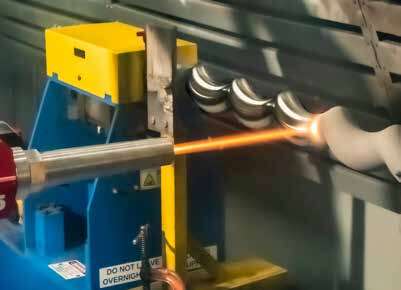
Introducing the N.Durance™ Tungsten Carbide Fusion Coating Technology Series – a technological
breakthrough in wear resistance performance with enhanced surface treatment technology.
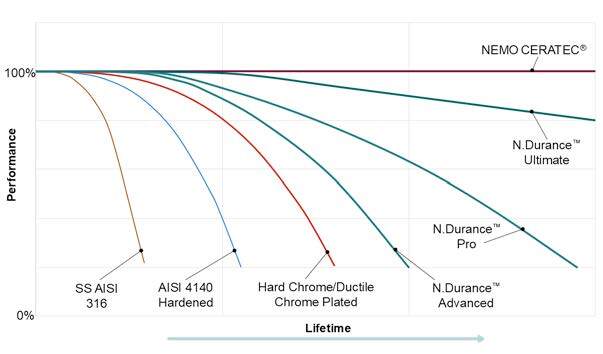
Designed to improve the durability, performance, and reliability of your NETZSCH NEMO® Progressing Cavity Pumps. N.Durance™ Advanced, N.Durance™ Pro, and N.Durance™ Ultimate leverage advanced tungsten carbide fusion technology optimized by NETZSCH to outperform traditional surface treatment options, delivering unrivaled
protection and extending the service life of your NEMO® pump’s core components. Additionally, the lifetime of all other critical pump components —most promininently the stator—will improve as well, maximizing overall pump reliability and performance and lower total cost of ownership.
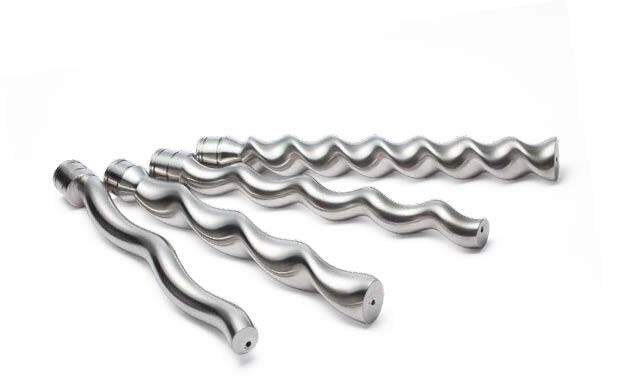
NEMO® Progressing Cavity Pumps (PCP) are rotating, positive displacement pumps. The basis of the PCP principle is the geometrical fit between the rotating precision-engineered element (Rotor) and the stationary component (Stator).
The rotor is typically a single helix shape and is normally made of a metallic, wear-resistant material.
The stator is formed as a double helix shape made out of durable elastomer. Both components are
designed for an interference fit, meaning the OD of the rotor is greater than the ID of the stator. Due
to this design a series of sealed chambers (called cavities) are created. As the rotor turns eccentrically
within the stator fluid enters the cavity formed at the inlet and progresses gently within that cavity to the
outlet. The result is a positive, non-pulsating flow that is directly proportional to the pump’s speed.
The interference fit along the sealing line is critical to the proper and long lasting operation and that
is where the rubber meets the rotor.
As the NEMO® pump is also capable of pumping highly abrasive products loaded with solids, it is
imperative to choose the right rotor surface material which provides a hardness which is
greater than the hardness of the solids in the liquid. As a result, we can assure a long life time
of the rotor and as result also an increased lifetime of the stator.